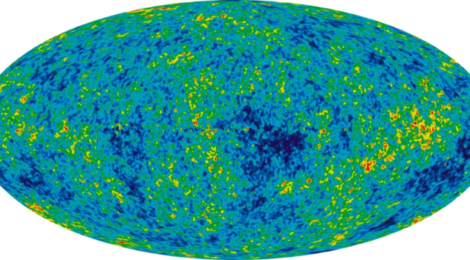
From Gravitons to Planckton: An Ecological view of the Theory Of Everything
Planckton is a Planck-scale alternative to the graviton in an emergent gravity model
For decades, physicists have searched for the graviton — a hypothetical particle meant to carry the force of gravity.
The search has been noble, expensive, mathematically ornate… and so far, fruitless.
Perhaps the problem is not experimental sensitivity.
Perhaps it is conceptual framing.
In my work on the GAC5D (Gravitational Aether Casimir in Five Dimensions) model, gravity is not a pull, not a force transmitted across empty space, and not something that needs a messenger particle in the traditional sense.
Instead, gravity emerges — the way weather emerges, the way ecosystems emerge, the way ocean pastures emerge.
Enter the Planckton
I propose a reframing:
What we have long called a graviton is better understood as a Planckton — a Planck-scale constituent of spacetime itself.
The name is deliberate. Planckton is a Planck-scale alternative to the graviton in an emergent gravity model.
Just as plankton are the smallest, most overlooked lifeforms in the ocean — yet collectively regulate climate, clouds, fisheries, and carbon — Planckton are the smallest constituents of spacetime whose collective behavior gives rise to gravity, inertia, time, and structure. It seems obvious that the microcosm begets and mimics the macrocosm.
No single plankton controls the ocean.
No single Planckton controls gravity.
But together, density gradients matter.
Gravity as Pressure, Not Pull
In GAC5D, spacetime is not empty.
It is filled with a Planck-scale aether composed of Planckton.
Mass does not “attract” anything.
Instead:
-
Matter excludes Planckton
-
Exclusion creates pressure gradients
-
Pressure gradients produce acceleration
Gravity is what falling feels like when spacetime pushes.
This is why gravity behaves:
-
like a field
-
like a fluid
-
like a statistical phenomenon
Because it is.
Ecological Collapse Scales Up — Always
In the ocean, when plankton pastures collapse:
-
fish disappear
-
clouds thin
-
rainfall shifts
-
climate warms
Not because fish were removed directly — but because the base layer failed.
In cosmology, when Planckton coherence shifts:
-
spacetime curvature changes
-
inertial frames evolve
-
structure forms or dissolves
Different scales.
Same logic.
The Casimir Lesson
The Casimir effect already teaches us that:
-
geometry matters
-
boundaries matter
-
“empty space” is not empty
GAC5D extends this insight:
-
spacetime cavities are ecological niches
-
Planckton density and coherence define physical law locally
The universe is not built from forces.
It is grown from conditions.
Why Naming Matters
Naming shapes thinking.
Calling these entities “gravitons” locks us into:
-
force-carrier metaphors
-
particle exchange diagrams
-
quantum gravity dead ends
Calling them Planckton invites:
-
population thinking
-
emergent law
-
ecological reasoning
It reconnects physics with reality.
Atom-Ecology, Reunified
Atom-ecology is the study of how small-scale rules scale up into large-scale order.
Planckton complete the loop:
-
From quantum foam to galaxies
-
From plankton blooms to rainfall
-
From micro to macro, without magic
The universe, like the ocean, is alive with structure — not because it was commanded to be so, but because it is densely, dynamically, and relationally populated.
Neglect the small.
Lose the whole.