Edward Teller’s and My Discovery Of Cold Fusion Mischugenons
Mischugenons: A New Frontier in Cold Fusion Radiation Phenomena
In the annals of scientific exploration, few fields have stirred as much controversy and intrigue as cold fusion. Once dismissed as a scientific misstep following the 1989 Fleischmann-Pons debacle, the pursuit of low-energy nuclear reactions (LENR) has persisted in the shadows, driven by persistent anomalies that defy conventional explanation. My experiments of some years ago in nano-material gas-phase glow discharge cold fusion uncovered a phenomenon that challenges established nuclear physics.
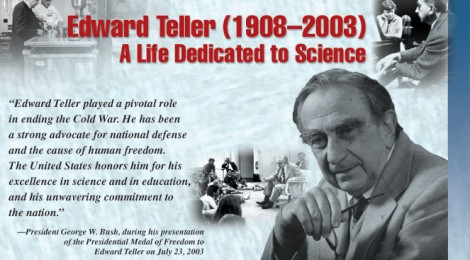
Let’s listen to what the data spoke. Extraordinarily large radiation emissions enough to fully saturate Geiger counters that mimicked the signature of neutrons yet exhibited a benign character, unlike the hazardous emissions typically associated with nuclear processes, (The proof of the benign character is the fact that I lived to tell this tale.) These enigmatic radiations, observed in collaboration with the legendary physicist and my collaborator Dr. Edward Teller, Edward dubbed these as “mischugenons”—a playful yet provocative nod to their mysterious/crazy nature. This discovery not only echoes Teller’s visionary insights into conventional and unconventional nuclear reactions but also suggests a deeper connection to quantum coherence, a frontier where atomic and nuclear systems may resonate in ways previously unseen. What are mischugenons, and how might they reshape our approach to cold fusion research?
The Experimental Genesis of Mischugenons
The experiments that led to the discovery of mischugenons were rooted in a nano-dimension-palladium gas-phase approach to cold fusion, using glow discharge to activate the system as distinct from the electrolytic methods that dominated early cold-fusion studies. By leveraging specificallypurpose made nanoscale materials and deuterium gas under carefully controlled conditions —we observed bursts of radiation orders of magnitude above the background levels being measured. These emissions bore a striking resemblance to neutron radiation in their intensity and temporal profile, yet they lacked the lethal penetration and biological hazard associated with neutrons from conventional fusion or fission reactions. Dr. Teller, with his unparalleled expertise in nuclear physics and a career marked by bold hypotheses, recognized these events as unprecedented. He proposed the term “mischugenons” to encapsulate their hybrid, elusive quality—neither fully neutron nor entirely innocuous.
When I explained to Dr Tell apologetically that my “primitive” technique was far from a more modern neutron spectrometer approach he interrupted me saying.
“Do not apologize for your methods, you have measured these ‘neutrons’ the way real men measured neutrons when we first discovered them! Now go on tell me more of the details.”
After a long conversation he said he would give this some thought but one thing he said that was reassuring was that since the Geiger readings were so large had what radiation I was measuring been ordinary neutrons I should surely have been “cooked”. Since I was not the particles emanating from the experiment must be something entirely new, some mischugenons perhaps, crazy particles, until now unknown to science.
Teller’s involvement was more than symbolic. His earlier musings, as recounted in historical accounts of his lectures, hinted at the possibility of nuclear reactions facilitated by mechanisms beyond the brute force of high-temperature plasmas. My findings seemed to resonate with his speculation that subtle, lattice-mediated processes—or perhaps quantum coherent states—could unlock nuclear energy in ways previously overlooked. The mischugenons emerged as a tangible manifestation of this vision: radiation events that suggested a nuclear origin but defied the expected consequences, potentially tied to the quantum coherence observed in my broader atom-ecology experiments.
What Might Mischugenons Be?
The nature of mischugenons invites speculation, but any hypothesis must be grounded in the broader context of LENR research and nuclear physics, now enriched by the lens of quantum coherence. Scientific literature offers several clues, though no single model fully accounts for these observations. One possibility is that mischugenons represent a form of low-energy neutron-like emission moderated by the nanoscale environment. Studies of lattice confinement fusion, such as those conducted by NASA’s Glenn Research Center, have demonstrated that deuterated metals exposed to gamma radiation can produce neutrons via photodissociation, albeit at very modest levels. My experiments, however, yielded radiation bursts orders of magnitude larger, suggesting an amplification mechanism tied to the nano-dimensional gas-phase glow-discharge stimulated system—perhaps a collective resonance or screening effect within the lattice.
Alternatively, mischugenons could be a composite phenomenon, blending nuclear and electromagnetic signatures within a quantum coherent framework. My more recent work, detailed in an exploration of solar-stimulated cold fusion, suggests that quantum coherence—the synchronized behavior of atomic and nuclear wave functions—may play a pivotal role in LENR. In these experiments, deuterium-loaded nanoscale systems exhibited gamma emissions and excess heat, hinting at a coherent state where nuclear reactions are facilitated not by random collisions but by a resonant alignment of particles. Mischugenons might emerge as a signature of this coherence, a quantum resonance effect where energy is channeled into a neutron-like radiation that operates at a spooky distance but dissipates harmlessly. Unlike the stochastic, high-energy processes of hot fusion, this coherent domain could suppress hazardous emissions, rendering mischugenons benign yet detectable.
This quantum perspective aligns with reports from the cold-fusion community, such as Yoshiaki Arata’s 2008 documentation of excess heat and helium-4 production in deuterium-loaded nanopowders, which hinted at nuclear reactions without strong gamma or neutron emissions. In fact my nano-particle palladium was part of a supply I had used while working in Dr. Arata’s laboratory in Osaka. The benign character of mischugenons might indicate a suppression of high-energy particles, with energy dissipated through a novel channel—possibly phonons, photons, or a hereto-fore unseen quantum quasi-particle born of coherence. Teller’s own work on muonic catalysis and his openness to unconventional nuclear pathways lend credence to the idea that mischugenons could be a byproduct of a yet-unrecognized reaction branch, amplified by quantum resonance in the lattice.
A more radical hypothesis posits that mischugenons are evidence of a transmutation process within a coherent quantum system. Researchers like Tadahiko Mizuno and George Miley have reported anomalous elemental shifts in cold fusion experiments, suggesting neutron capture or proton-induced reactions. If mischugenons are linked to such events, their “neutron-like” profile might stem from a transient, coherent nuclear state that decays harmlessly, emitting energy in a form that mimics neutrons in detectors but lacks their penetrating power. Quantum coherence could stabilize these states, allowing nuclear events to occur at lower energies than classical theory predicts.
Searching the Scientific Literature
The scientific literature on LENR, while fragmented and often contentious, provides a foundation for contextualizing mischugenons, particularly when viewed through the lens of quantum coherence. A 2019 Nature study funded by Google revisited cold fusion claims and found no evidence of fusion, yet it highlighted the value of exploring “underexplored parameter spaces” in highly hydrided metals—precisely the domain of my nano-dimension experiments. Similarly, a 2004 review by Edmund Storms documented over 20 papers confirming excess heat in LENR setups, with some noting low-level radiation anomalies. More recently, ARPA-E’s 2023 funding initiative for LENR underscores a growing willingness to reexamine these phenomena, with a focus on reproducible mechanisms.
Reports of neutron emissions in LENR experiments, such as those by Mosier-Boss in 2009 using CR-39 detectors, offer a parallel to mischugenons, though their ordinary hazardous nature contrasts with my benign particle findings. The lattice confinement work at NASA, published in 2024, observed boosted neutron production in deuterated erbium, suggesting that nanoscale structures can enhance nuclear reaction rates. My recent March 2025 blog post on solar-stimulated cold fusion further ties these anomalies to quantum coherence, proposing that synchronized quantum states in deuterium-loaded systems could amplify nuclear effects while altering their radiation profile. Mischugenons, as a potential quantum resonance phenomenon, might bridge these observations, representing a new class of radiation unique to coherent LENR systems.
Directing Future Experiments
The discovery of mischugenons, potentially rooted in quantum coherence, compels a targeted experimental agenda to unravel their identity and harness their implications. First, precise characterization is essential. Advanced radiation detectors—such as high-resolution neutron spectrometers, gamma-ray counters, and electromagnetic sensors—should be deployed to map the energy spectrum, temporal dynamics, and directional properties of mischugenons. Time-of-flight measurements could distinguish their velocity from that of true neutrons, while quantum state probes (e.g., laser spectroscopy) could detect coherent oscillations in the lattice during emission events.
Second, the role of quantum coherence must be explicitly tested. Varying the nanoscale morphology—particle size, surface roughness, and composition (e.g., substituting palladium with nickel or titanium)—could reveal how structural features sustain coherence and trigger mischugenon production. Solar-like energy inputs, as explored in my 2025 experiments, should be systematically applied to induce resonance, with real-time monitoring via in-situ X-ray diffraction or neutron scattering to link atomic-scale coherence to radiation bursts.
Third, reproducibility remains the linchpin. The nano-dimension gas-phase setup, optimized for quantum coherence, should be standardized and shared with independent labs, echoing Teller’s insistence on rigorous validation. Controlled variables—gas pressure, temperature, and external stimuli (e.g., light or electrical pulses)—could pinpoint the conditions under which mischugenons emerge, testing whether coherence is a prerequisite for their generation.
Finally, theoretical collaboration is critical. Engaging quantum physicists to model mischugenons as a resonance phenomenon—perhaps a coherent superposition of nuclear and electromagnetic states—could bridge observation and explanation. Computational simulations of deuteron wavefunctions in confined, coherent geometries might predict the conditions for mischugenon emission, guiding experimental refinement. Such models could also explore whether mischugenons are a previously unseen quantum effect, akin to Bose-Einstein condensates or polaritons, but manifesting in the nuclear domain.
A Legacy of Curiosity
The late great Edward Teller’s endorsement of mischugenons reflects his lifelong refusal to let orthodoxy stifle inquiry. My experiments, building on his intellectual legacy and my own exploration of quantum coherence, suggest that cold fusion harbors secrets yet to be unlocked. Mischugenons—massive, neutron-like, yet benign—challenge us to rethink the boundaries of nuclear science, potentially as a quantum resonance phenomenon born of coherent atomic systems. Whether they prove to be a new particle, a reaction byproduct, or a signature of hereto-fore unseen quantum effects, their pursuit promises to illuminate the murky waters of LENR. As we design the next wave of experiments, the spirit of discovery that Teller championed urges us forward: to question, to test, and to redefine what we believe is possible.