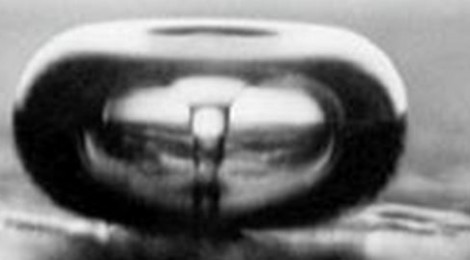
Ultrasound-Initiated Cavitation: From Sonoluminescence to Sonofusion
Abstract
Ultrasound-induced cavitation in liquids generates extreme physical conditions capable of driving remarkable phenomena. In normal water (H₂O), symmetric bubble collapse produces sonoluminescence, a fleeting emission of light with a duration of 10-30 pico seconds appears to be tied to quantum coherence. In heavy water (D₂O) cavitation, asymmetric bubble collapse onto a target surface comprised of hydrogen/deuterium-loving metals like palladium or titanium triggers sonofusion—a form of cold fusion I describe as sonofusion—evidenced by macroscopic heating, melting, and helium-4 (⁴He) production (10¹⁰–10¹³ atoms/s), always without detectable radiation. Drawing from experiments reported on *Atom Ecology* (George, 2015), this paper explores how cavitation dissociates deuterons, organizes and energizes them, loads them into metal lattices, provides a phone dense environment and this leverages quantum coherent processes to facilitate fusion, which is associated with unique melting features indicative of subsurface nuclear heat sources.
- Introduction
Cavitation, the rapid formation and collapse of vapor bubbles in a liquid under acoustic pressure, generates localized conditions of extreme temperature and pressure. In symmetric collapse within normal water (H₂O), this phenomenon manifests as sonoluminescence—light emission from the compressed bubble interior. However, when cavitation occurs asymmetrically in heavy water (D₂O) near metal surfaces like palladium or titanium, the outcome shifts dramatically toward sonofusion, a cold fusion process. As documented in *More Miracle Moments in Cold Fusion* (George, 2015), experiments reveal anomalous heat, metal melting, and helium-4 production, suggesting nuclear processes at play. Recent studies further indicate that sonoluminescence exhibits quantum coherence (The Quantum Insider, 2022), providing a framework for understanding how sonofusion avoids the prohibition of classical particle fusion physics. My paper begins to elucidate these mechanisms, focusing on deuteron dissociation, lattice loading, phonon excitation, quantum coherence, and unique melting characteristics as evidence of nuclear heat generation.
- Experimental Basis: Cavitation and Its Outcomes
Experiments described on *Atom Ecology* utilized 20 kHz ultrasound to induce cavitation in flowing heavy water, with metal foils (palladium, titanium) as targets (George, 2015). Symmetric collapse in H₂O produces sonoluminescence, consistent with established literature. In contrast, asymmetric collapse in D₂O onto metal surfaces yielded extraordinary results:

– **Anomalous Heat and Melting**: Temperature increases and long term hours to days of persistent thermal output far exceeded input energy, with some palladium and titanium foils proceeding to destruction exhibiting macroscopic melting and microscopic “volcano-like” eruptions (George, 2015).
– **Helium-4 Production**: Gas samples post-experiment showed ⁴He levels significantly above atmospheric background (5.22 ppm), confirmed across multiple labs (e.g., Amarillo Helium Lab, Los Alamos, and more).
– **Isotopic Shifts**: Time-of-flight secondary ion mass spectrometry (TOF-SIMS) revealed high-Z isotopic anomalies in palladium, indicative of nuclear transformations.
These findings suggest that cavitation in D₂O drives conditions conducive to cold fusion, distinct from sonoluminescence in H₂O.
- Cavitation-Induced Extreme Conditions
Cavitation generates transient microenvironments with temperatures reaching 10⁶–10⁸ K and pressures exceeding 10⁷ atm within collapsing bubbles (Suslick, 1989). In symmetric collapse, these conditions compress H₂O vapor, emitting light via thermal bremsstrahlung or molecular recombination. Asymmetric collapse near a solid boundary (e.g., metal foil) amplifies these effects:
– **Shockwave Amplification**: The asymmetric implosion focuses energy into a jet-like flow, impacting the metal surface at velocities up to 1000 m/s (Crum, 1994).
– **Localized Energy Density**: The bubble wall and vortex achieve terapascal pressures, comparable to stellar interiors, sufficient to dissociate D₂O into deuterons (D⁺) and oxygen species.
This extreme energy concentration is the first step in enabling sonofusion, as it liberates deuterons for subsequent lattice interactions.
- Dissociation and Loading of Deuterons into Metal Targets
The dissociated and modified deuterons from D₂O are presented or perhaps driven into the metal lattice under cavitation’s mechanical and thermal forcing:
– **Injection Mechanism**: The high-velocity jet and shockwave from asymmetric collapse “inject” deuterons into the metal surface, penetrating beyond the superficial layer (George, 2015). This contrasts with electrolytic loading, where diffusion from the surface dominates.
– **Metal Affinity**: Palladium and titanium, known for their hydrogen/deuterium affinity, absorb deuterons into interstitial sites, achieving densities approaching or exceeding that of metallic hydrogen (Fukai, 1993).
– **Ultra-Dense Domains**: Localized regions within the lattice may reach terapascal pressures, forming ultra-dense deuterium phases akin to Bose-Einstein condensates, as speculated in cold fusion contexts (Ikegami, cited in George, 2015).
This loading process creates a high-density deuteron population within the metal, setting the stage for fusion.
- Quantum Coherent Processes and Cold Fusion
The absence of measurable high-energy radiation (e.g., 24 MeV gamma rays expected from D+D → ⁴He) despite significant ⁴He production suggests a non-traditional fusion pathway facilitated by quantum coherence within the metal lattice. Recent research on sonoluminescence provides a foundation for understanding this phenomenon:
– **Quantum Nature of Sonoluminescence**: Studies reported in *The Quantum Insider* (2022) demonstrate that sonoluminescence arises from quantum coherent processes within the collapsing bubble. Eberlein et al. (2022) found that the emitted light’s brevity—picosecond-scale pulses—cannot be explained by classical thermal emission alone, suggesting a zero-point energy fluctuation or coherent quantum state collapse (Eberlein, 1996). The World Scientific review by Putterman (2015) reinforces this, noting that the sub-nanosecond duration of light emission (e.g., 50–100 ps) aligns with quantum electrodynamic models, implying a collective quantum event rather than random molecular recombination.
– **Utility in Sonofusion**: In sonofusion, this coherence extends to deuterons loaded into the metal lattice. Confined to nanoscopic domains, deuterons may form singlet states with paired spins, enhancing wavefunction overlap (Schwinger, 1990). Lattice phonons couple with these pairs, driving a collective fusion process that distributes energy as heat rather than gamma rays. The picosecond-scale coherence observed in sonoluminescence parallels the rapid, localized energy release in sonofusion, potentially mediated by ultra-dense deuterium phases (Holmlid, 2017).
– **Implications**: Quantum coherence could enable efficient energy transfer at scales relevant to quantum technologies, as speculated in *The Quantum Insider* (2022), while in sonofusion, it suppresses radiative losses, explaining the observed thermal output and correllated ⁴He yields (10¹⁰–10¹³ atoms/s).
 SEM evidence of “helium loop punching” in palladium supports a nuclear origin, consistent with coherent, lattice-mediated fusion (George, 2015). These features—small, circular defects resembling dislocation loops—are analogous to those observed in Californium metal, where alpha particle production from well-known fission processes generates helium within the lattice (Haire & Gibson, 1989). Similar “loop punching” is also documented in metals subjected to neutron bombardment and spallation, where helium accumulates from nuclear reactions (e.g., (n,α) processes) and induces lattice strain (Trinkaus & Singh, 2003). In these cases, the formation of helium bubbles and subsequent loop punching is a well recognized signature of internal helium production via nuclear mechanisms. The striking similarity of these features in palladium and titanium from sonofusion experiments strongly suggests that the observed “loop punching” arises from helium generated within the metal lattice, consistent with the proposed D+D → ⁴He reaction. This parallel to established nuclear phenomena reinforces the interpretation that sonofusion involves nuclear processes producing helium inside the metals, as evidenced by the high ⁴He yields reported (George, 2015).
5.1. Melting Characteristics and Subsurface Heat Generation
Experimental observations of palladium and titanium targets reveal melting features that further illuminate sonofusion’s mechanisms:
– **Volcanic-like Eruptions**: Scanning electron microscopy (SEM) of cavitated metal foils shows microscopic “volcano-like” eruptions—craters with raised rims formed by vaporized and melted metal (George, 2015). These features, observed in palladium and titanium, resemble geological volcanic structures, suggesting explosive subsurface energy release.
– **Thermal Modeling**: The heat required to melt and vaporize metal in these metal eruptions exceeds the capacity of surface chemical reactions in water. Thermal conduction models indicate that a chemical process (e.g., exothermic D₂O-metal interactions) would dissipate heat into the surrounding liquid at rates preventing localized melting (Carslaw & Jaeger, 1959). In contrast, the observed eruptions demand a heat production rate—potentially gigawatts per cubic centimeter in nanoscale domains—that originates deep within the lattice, consistent with nuclear fusion.
– **Subsurface Origin**: The morphology of these eruptions, with molten metal expelled outward, implies a pressure-driven event initiated below the surface, possibly from ⁴He formation or lattice strain relaxation. This aligns with reports of isotopic anomalies (e.g., high-Z elements) detected via TOF-SIMS (George, 2015), suggesting nuclear reactions at depth.
These characteristics distinguish sonofusion from surface-driven phenomena, reinforcing the role of deuteron loading and quantum coherence in generating localized, nuclear-scale energy.
- Discussion
The interplay of cavitation, quantum coherence, and lattice dynamics bridges sonoluminescence and sonofusion. In H₂O, symmetric collapse yields light via coherent quantum processes (Putterman, 2015); in D₂O, asymmetric collapse drives deuterons into metals, where similar coherence facilitates fusion. The volcanic melting features, helium loop punching, and high ⁴He yields (10¹⁰–10¹³ atoms/s) without radiation challenge classical fusion models, pointing to a lattice-mediated, low-energy pathway. Thermal modeling of the melting events and analogies to nuclear-irradiated metals (e.g., Californium, neutron-bombarded samples) further point to a nuclear heat source, as chemical processes cannot account for the observed effects. While deuteron density and exact quantum mechanisms require further study, these findings align with broader cold fusion research and quantum technology implications (The Quantum Insider, 2022).
- Conclusion
Ultrasound-initiated cavitation links sonoluminescence’s quantum coherence to sonofusion’s nuclear outcomes. In D₂O, cavitation dissociates deuterons, loads them into palladium or titanium, and triggers coherent fusion processes, producing heat, melting, and ⁴He without significant radiation. Unique melting features—volcanic eruptions and subsurface heat—and helium loop punching akin to fission and neutron-induced effects underscore the nuclear nature of this energy. Building on *Atom Ecology* (George, 2015) and recent quantum insights, sonofusion emerges as a promising field for energy and quantum research.
The logical next step is to produce useful energy in arrays of sono-fusion components at very low cost offering perhaps an unlimited supply of clean energy where the fuel is abundant and inexpensive heavy water.
References
– Carslaw, H. S., & Jaeger, J. C. (1959). *Conduction of Heat in Solids*. Oxford University Press.
– Crum, L. A. (1994). Sonoluminescence, sonochemistry, and sonophysics. *Journal of the Acoustical Society of America*, 95(1), 559.
– Eberlein, C. (1996). Sonoluminescence as quantum vacuum radiation. *Physical Review Letters*, 76(20), 3842–3845.
– Fukai, Y. (1993). *The Metal-Hydrogen System*. Springer.
– George, R. (2015). *More Miracle Moments in Cold Fusion*. Atom Ecology. Available at: *https://atom-ecology.russgeorge.net/2015/01/04/more-miracle-moments/*
– Haire, R. G., & Gibson, J. K. (1989). Actinide metal studies: Californium and beyond. *Journal of Radioanalytical and Nuclear Chemistry*, 133(1), 133–144.
– Holmlid, L. (2017). Ultra-dense fusion: A physics/energy magnum opus. *Atom Ecology*. Available at: *https://atom-ecology.russgeorge.net/2017/01/19/ultra-dense-fusion-a-physicsenergy-magnum-opus/*
– Putterman, S. J. (2015). Sonoluminescence: Sound into light. In *Handbook of Acoustics* (pp. 421–432). World Scientific. Available at: *https://www.worldscientific.com/doi/abs/10.1142/9789814719063_0042*
– Schwinger, J. (1990). Cold fusion: A hypothesis. *Zeitschrift für Physik D*, 15(3), 221–225.
– Suslick, K. S. (1989). The chemical effects of ultrasound. *Scientific American*, 260(2), 80–86.
– The Quantum Insider (2022). Researchers: Sonoluminescence has quantum nature and that may have implications for quantum tech. Available at: *https://thequantuminsider.com/2022/04/08/researchers-sonoluminescence-has-quantum-nature-and-that-may-have-implications-for-quantum-tech/*
– Trinkaus, H., & Singh, B. N. (2003). Helium accumulation in metals during irradiation—Where do we stand? *Journal of Nuclear Materials*, 323(2–3), 229–242.